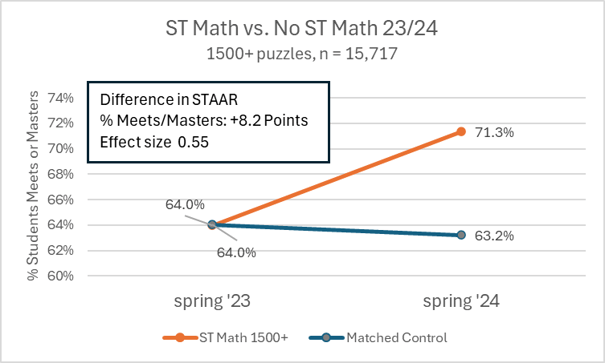


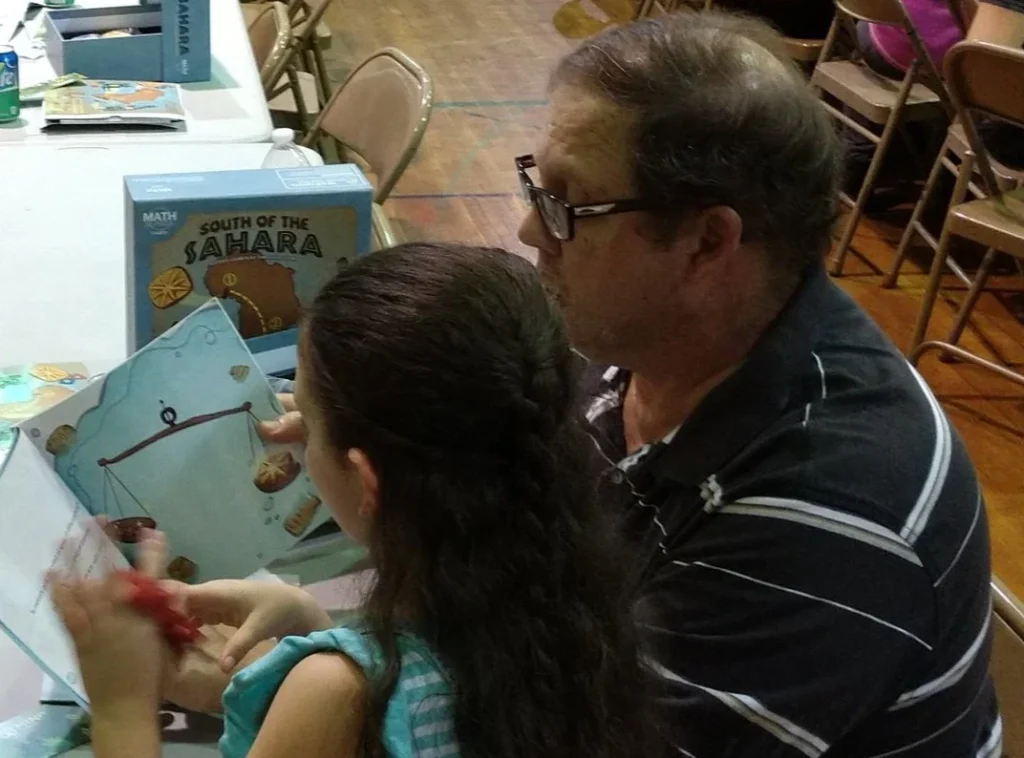
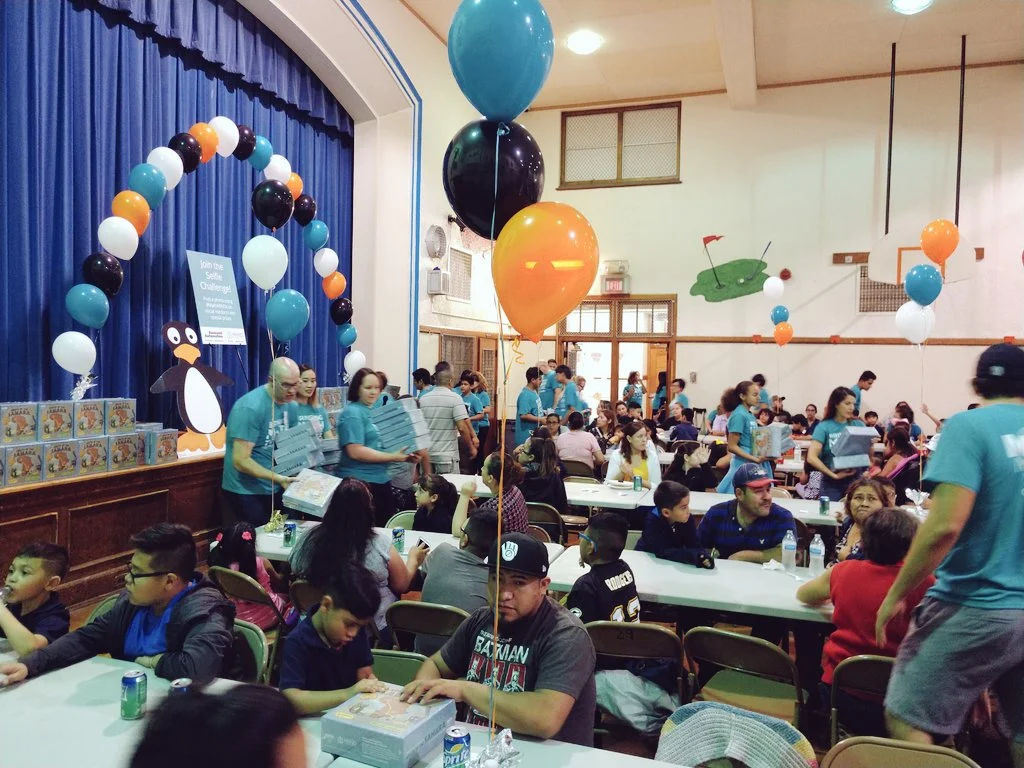
MathMINDs Games invites the entire community to come together and play math. Each game set includes thoughtfully designed game boards and storybooks, including everything you need to host a complete family engagement event that blends literacy, math, history, and geography into one joyful experience.
These events are easy to run, welcoming to all families, and powerful in helping caregivers see learning as something they can lead and enjoy together.
What to Plan For
- Let families lead the experience—no facilitation guides required.
- Encourage families to play the games in order:
- Achi
- Gulugufe
- Fanorona (a great challenge game)
- Staffing: One volunteer for every 15–20 attendees.
- Timing: Plan for 45–60 minutes of gameplay for Achi and Gulugufe.
- Early learners: Provide a separate activity area for children under age seven.
1. Allow Families to Lead the Experience
The whole experience is designed so that families can simply pick up a box and begin. No instructions needed.
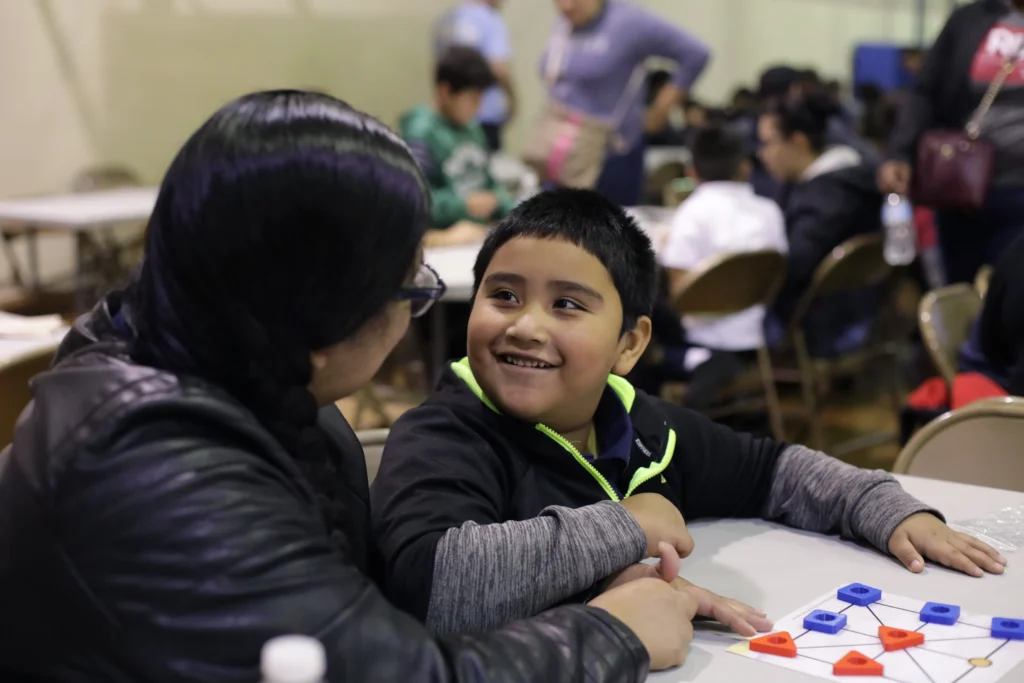
Families start by reading the Achi storybook together. The story naturally guides them through setting up the board, learning the rules, and playing the game. This design empowers families to take ownership of the experience and reinforces the idea that learning time is family time.
2. Recruit a Few Volunteers
Plan to have one volunteer for every 15-20 attendees. Teachers, other staff, and experienced students make great volunteers.
No training or prior gameplay experience is required. Volunteers can:
- Step in as an extra player when needed
- Distribute games
- Encourage families to read and play together
- Help act out storybook scenarios on the game boards
3. Provide an Early Learning Activity Area
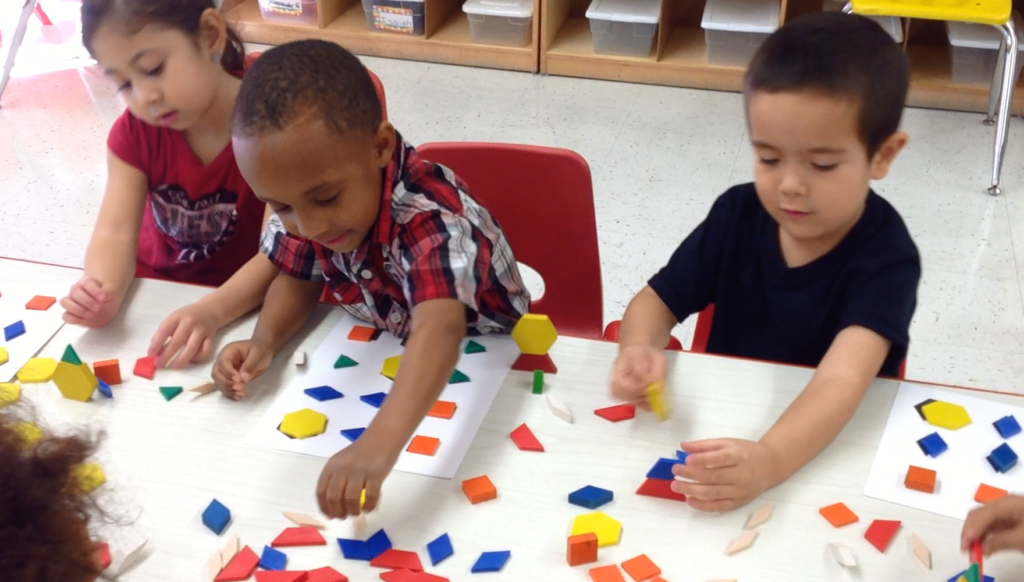
MathMINDs storybook games are ideal for ages seven and up. To support families with younger children, set up an alternate activity area for early learners.
Choose age-appropriate activities and assign specific volunteers to support this space. Free activities and facilitation guides for pre-K and kindergarten learners are available on our website.
4. Extend the Learning at Home
Empower families to lead similar experiences at home. You can allow families to take the games home or put them in the library to be checked out by families.
Send a follow-up message to families letting them know how to continue playing, as well as links to resources such as the parent math resources and a list of board games that inspire mathematical thinking.
Let them know about the educational benefits of reading and playing the games together, including:
- reinforcing math concepts,
- building number sense,
- engaging in mathematical conversations,
- multi-step problem solving,
- and much more.
5. Remember: Math is from Everywhere, in Everything, and for Everyone
MathMINDs Games was developed as part of MIND Research Institute’s mission to ensure all students are mathematically equipped to solve the world’s most challenging problems. Development of MathMINDs Games: South of the Sahara was funded by Rockwell Automation.
We encourage you to share this information with your administrators and local community leaders:
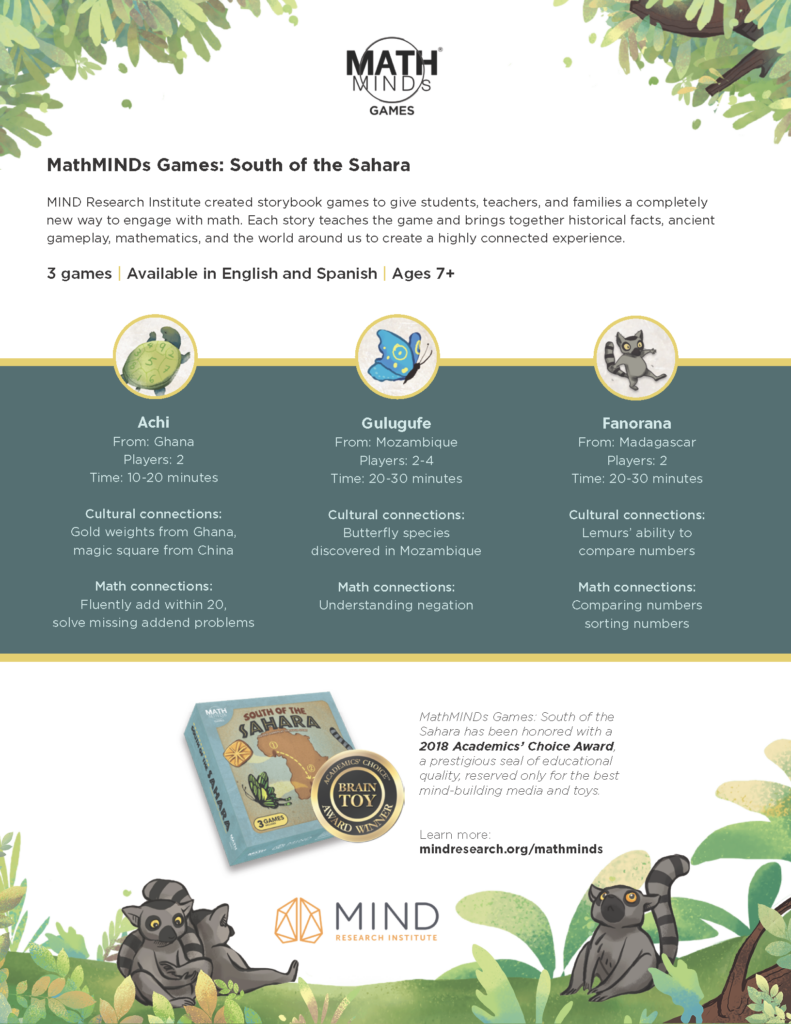
Interested in learning more and purchasing the games? Click here!