

What happens when students are given time, space, and encouragement to engage deeply with math?
They persist longer.
They make sense of challenging problems.
They begin to see themselves as capable.
JiJi Day returns in 2026 as a celebration of these moments—bringing classrooms across the country together around a shared focus: meaningful math learning through problem solving.
A Look Back at JiJi Day 2025
Last year, JiJi Day brought together students and educators nationwide in a collective moment of engagement with ST Math.
In a single day, students solved 6.3 million puzzles, with 437,000 students participating across 3,747 schools.
Beyond the numbers, educators observed something just as important. Students stayed engaged longer, worked through challenging problems, and experienced success through persistence. Classrooms became spaces where effort was visible, and progress was worth celebrating.
These outcomes reinforce a central idea: when students are supported in productive struggle, they build both confidence and capability in mathematics.
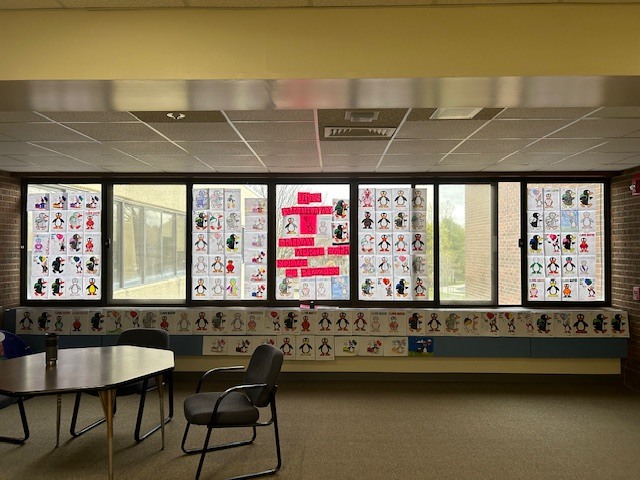
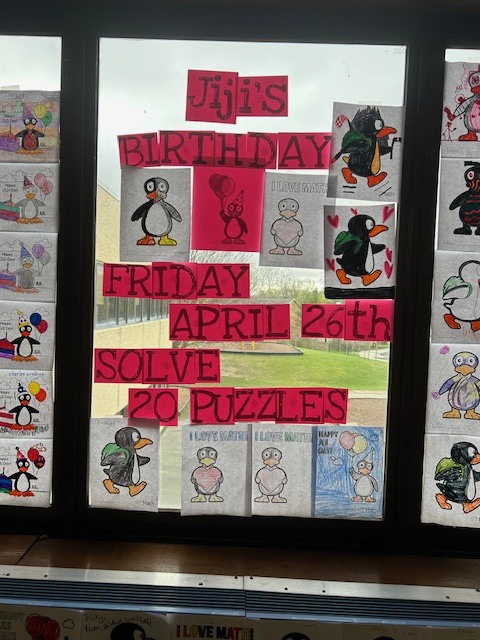
The students who met the goal colored pictures to celebrate and hung them up in the cafeteria.
A Shared Commitment to Problem Solving
At its core, JiJi Day is simple: creating time for students to engage deeply with math.
Students work through ST Math puzzles, building understanding through visual problem solving and persistence. There are no rankings or comparisons—just a focus on engagement, progress, and growth.
This approach creates space for all students to participate meaningfully. Whether a student solves a few puzzles or many, each moment of effort contributes to their development as a problem solver.
I love Jiji day because it gives students a chance to celebrate Jiji and all the math learning they do with Jiji! They also get to try to challenge themselves to earn extra puzzles that day
Renee Kelly, Interventionist & ST Math Champion
Why It Matters
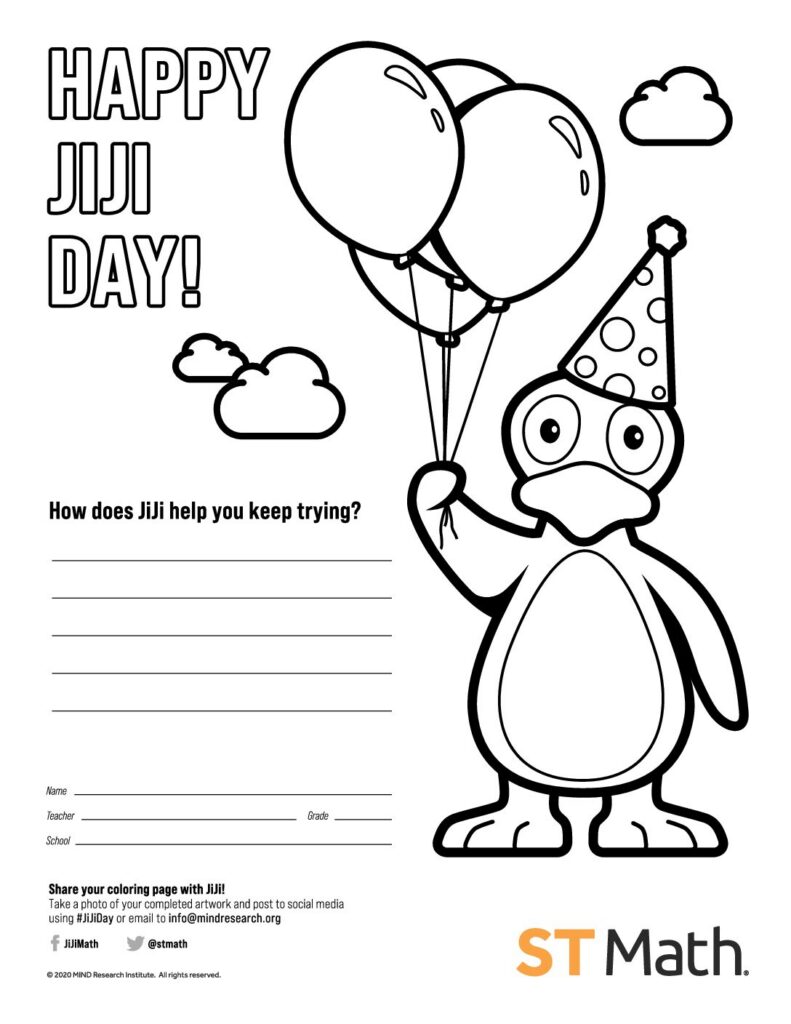
JiJi Day is a joyful celebration of ST Math’s beloved mascot, JiJi—the penguin who stays by students’ sides as they puzzle through each problem, growing their confidence and building deep, conceptual understanding of mathematics along the way.
JiJi Day reflects what math learning can look like at its best.

Through ST Math’s visual, puzzle-based approach, students:
- Build deep conceptual understanding through exploration
- Develop perseverance by working through challenges
- Gain confidence as they make sense of math visually and independently
What makes JiJi Day especially powerful is the space it creates. With dedicated time and a shared focus, students are able to stay with problems longer, take risks, and experience success through persistence—conditions that are essential for meaningful math learning.
And when students recognize their own progress, they begin to see themselves not just as learners of math, but as capable problem solvers.
Waddle You Do to Celebrate JiJi Day this Year?
This year, JiJi Day 2026 will take place on Friday, April 24th.
There’s no single way to participate. JiJi Day is designed to be flexible, allowing educators to shape the experience in ways that best support their students.
Some classrooms set a goal and dedicate time for students to work through ST Math puzzles. Others incorporate reflection, discussion, or small celebrations to highlight student effort and growth.
Whether it’s a full day, a class period, or a focused block of time, the goal is the same: creating space for students to engage deeply with problem-solving.
As JiJi Day continues to grow, it is not defined by competition or tracking, but by a shared commitment to meaningful math learning in classrooms everywhere.
JiJi Day 2026 Resources
To support your classroom celebration, here are a few resources to get started:

One Day. Meaningful Progress.
Each puzzle solved represents something more than progress in a program.
It reflects a student trying again after getting stuck.
A new idea beginning to make sense.
A moment of confidence that carries forward.
Taken together, these moments are what JiJi Day is all about: supporting students as they grow into capable, confident problem solvers.