

Celebrate Pi Day with ST Math: Bringing Circles and Sense-Making to Life
Pi Day, celebrated on March 14, is a joyful reminder that math is full of patterns, relationships, and discovery. The date 3/14 represents the first digits of π, approximately 3.14, the constant ratio of a circle’s circumference to its diameter.
But Pi Day is more than a number celebration. It is an opportunity to help students see math in motion, make connections, and experience the kind of visual sense-making that builds lasting understanding. That is exactly the kind of thinking ST Math is designed to support.
What Pi Reveals About Mathematical Thinking
Pi is constant across every circle, no matter the size. When students measure a circular object and divide its circumference by its diameter, they uncover the same relationship again and again. That moment of discovery reinforces an important truth about mathematics: patterns are not memorized; they are observed and reasoned through.
ST Math builds that same type of reasoning. Instead of beginning with formulas or abstract rules, students interact with visual models, test ideas, and receive immediate feedback. They see relationships before they are asked to symbolize them.
Pi Day is a natural extension of that approach.
Connect Pi Day Activities to ST Math Learning
Measure, Then Model
After students measure circular objects and approximate pi, encourage them to reflect on how they discovered the relationship. Ask:
- What patterns did you notice?
- How did you know your answer made sense?
- What changed when the circle was larger or smaller?
These questions mirror the sense-making students engage in daily on ST Math. The focus stays on reasoning, not memorizing.
Highlight Visual-First Learning
Pi is often introduced through formulas, but Pi Day is an opportunity to start visually. Draw circles, layer string around them, build with manipulatives, and let students see the ratio emerge.
That same visual-first design principle is central to ST Math. Students interact with mathematical ideas before language or formal notation is layered in. This reduces unnecessary cognitive load and allows more students to access deep thinking.
Connect to Geometry Objectives in ST Math
Many ST Math puzzles explore area and perimeter relationships, transformations and symmetry, proportional reasoning, and spatial relationships.
Use Pi Day as a moment to highlight how those skills connect to real-world geometry. After a Pi Day activity, invite students to log into ST Math and notice how circle-related reasoning builds on the same ideas of measurement, proportion, and pattern.
You might ask:
- How does the puzzle help you see relationships?
- Where do you notice repetition or consistency?
- What strategies helped you make sense of the puzzle?
Celebrate Productive Struggle
Pi is an irrational number. It continues infinitely without repeating. That fact alone can spark powerful conversations about perseverance and curiosity.
When students wrestle with measuring, estimating, or memorizing digits of pi, they are practicing productive struggle. On ST Math, students experience that same process through puzzle solving: attempt, feedback, revise, and try again.
Pi Day can reinforce that effort and iteration are part of learning, not signs of failure.
Make Pi Day Inclusive and Accessible
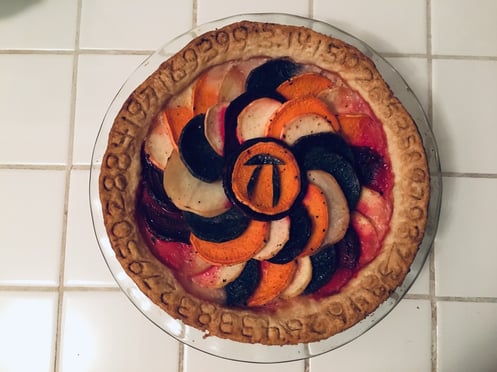
One of the strengths of Pi Day is that it invites hands-on exploration. Measuring string, building circles, and observing ratios make math visible and tangible.
ST Math supports this same inclusivity. By prioritizing visual reasoning and interactive problem solving, it allows students with diverse learning profiles to engage meaningfully with grade-level concepts.
Pi Day becomes more than a celebration. It becomes a reminder that when math is designed for access, more students can participate fully.
Extend the Learning Beyond March 14
Pi Day may only last a day, but the habits it encourages can shape the entire year:
- Notice patterns before applying rules.
- Explore visually before symbolizing.
- Encourage persistence through challenge.
- Celebrate discovery.
Those habits are embedded in daily ST Math use. When students log in, they are not just completing puzzles. They are building conceptual understanding through visual exploration.
Share Your Pi Day in Action!
If your class celebrates Pi Day using ST Math or hands-on circle investigations, we would love to see it. Share your photos or reflections by tagging @stmath.
Pi reminds us that math is consistent, connected, and discoverable. When students are given the chance to explore and reason, they uncover those relationships for themselves.
And that is something worth celebrating.