

Every so often, someone asks: What does the “ST” in ST Math actually stand for?
The answers can be quite entertaining.
Stop Talking. Super Thinkers. Surviving Tuesday, which may be the most honest answer yet.
And while we enjoy the creativity, the real answer is far more interesting — and far simpler — than most people expect.

ST stands for Spatial-Temporal.
Before that sounds overly technical, stay with me. Because this isn’t really a definition. It’s a story about how humans think — and why math sometimes feels natural for some learners and frustratingly out of reach for others.
The Brain You Already Have
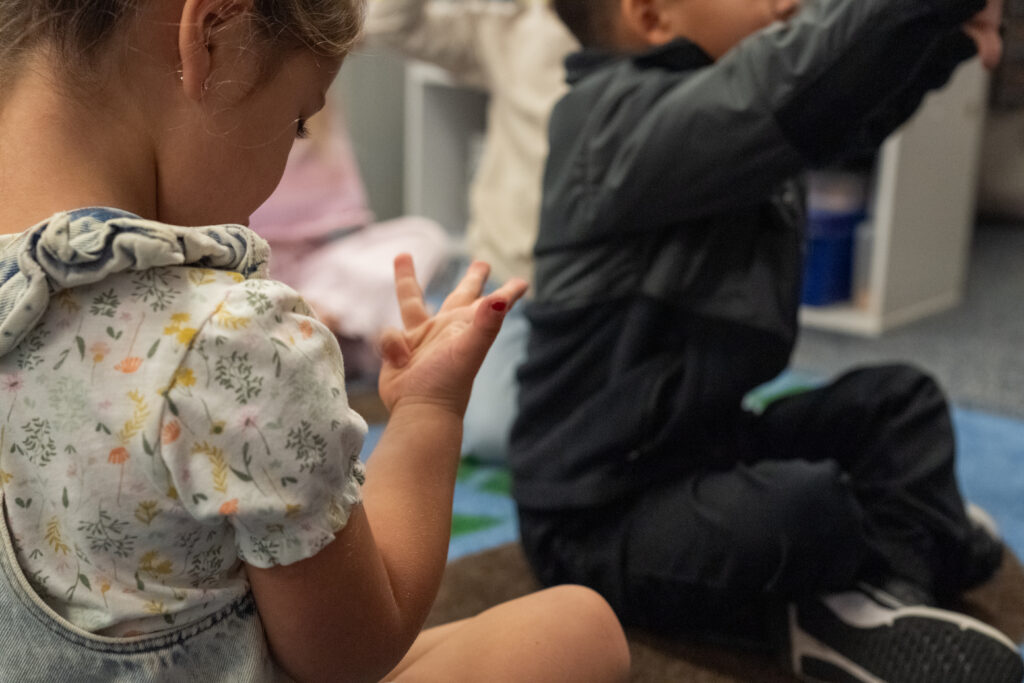
Long before we learn mathematics in school, we are already doing mathematics.
A baby reaches toward a moving object and predicts where it will be.
A child understands balance before learning the word equal.
We recognize patterns, symmetry, and change without anyone explaining rules.
This isn’t coincidence. It’s how the brain works.
The human brain is fundamentally a spatial-temporal system — built to understand relationships in space and how those relationships change over time.
Before language.
Before symbols.
Before formulas.
We see. We predict. We adjust.
Decades of cognitive science have shown that spatial reasoning — the ability to visualize and mentally manipulate relationships — is strongly connected to mathematical understanding and problem solving.
Math success doesn’t begin with symbols. It begins with how the brain perceives structure.
Yet much of mathematics education begins exactly where understanding is weakest — with symbols detached from experience.
It’s easy to assume students struggle because math is difficult, or because they just “aren’t a math person”. A quieter possibility is that we simply introduce it in the wrong order.
Math Was Spatial Before It Was Symbolic
We often talk about math as if it were invented through numbers and notation. But mathematics itself is pattern and transformation:
- shapes becoming other shapes,
- quantities balancing,
- systems changing predictably over time.
Symbols came later. Invented to describe ideas that humans already understood visually.
And yet, in many classrooms today, symbols arrive first, while understanding is expected to follow behind.
For some learners, nothing breaks. For many others, understanding never fully forms — because we ask students to manipulate symbols representing ideas they have never experienced.
It is a bit like asking someone to read before they have heard spoken language.
The Insight: Train the System Math Actually Uses
Here is the part that is often hardest to explain — and easiest to recognize once you see it.
Spatial-temporal reasoning is not just correlated with math ability. It can be developed.
When learners engage environments that require them to visualize, predict, test, and adjust, both spatial reasoning and mathematical problem solving grow together.
Instead of asking, How do we explain math more clearly?
The question became: What if explanation isn’t where understanding begins at all?
That idea eventually became ST Math.
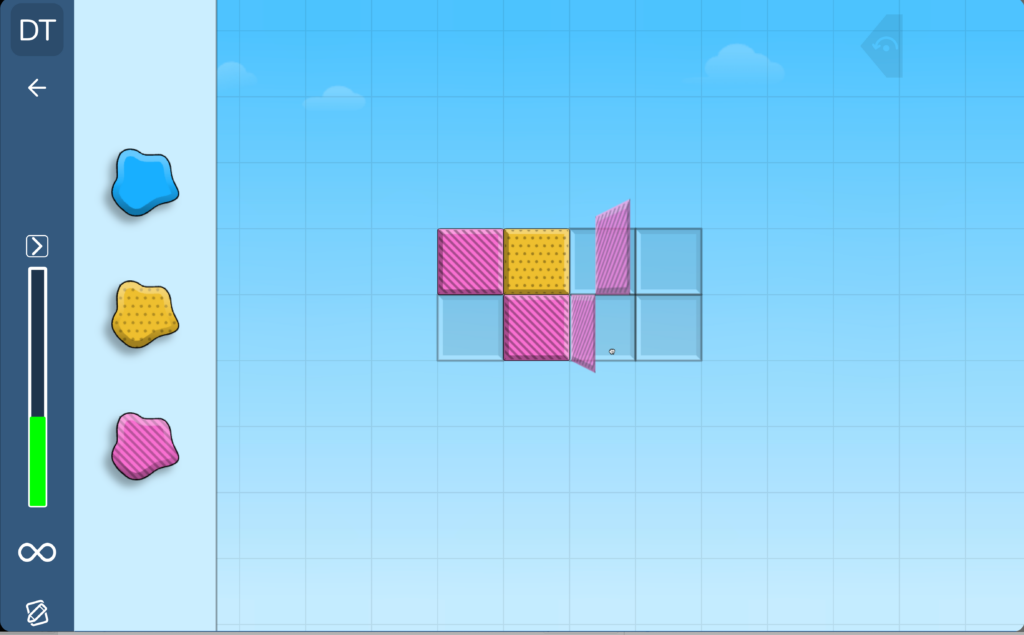
Not software layered onto instruction, but a learning environment intentionally designed to activate and strengthen spatial-temporal reasoning itself.
Students see. They try. They adjust. They understand.
Meaning forms before explanation.
Follow this QR code!
A Clue Hidden in Plain Sight: The Soroban
Interestingly, this approach echoes practices that have existed for centuries.
In Japan and other parts of Asia, students have long learned mathematics using the soroban, a form of abacus. With practice, learners begin visualizing the tool mentally, performing calculations by manipulating imagined beads in space.
Brain studies show that expert mental-abacus users rely heavily on visual and spatial processing rather than verbal calculation strategies.
They are not memorizing faster. They are thinking differently — using spatial representations to understand numerical relationships. The lesson isn’t that one tool is superior to another. It’s that when mathematics lives in the visual imagination, calculation becomes reasoning — not recall.

Designing for the Brain, Not Around It
ST Math was built around a simple but radical premise: If the brain is inherently spatial-temporal, and mathematics is fundamentally spatial-temporal, then math instruction should engage that system directly.
So learning begins with perception rather than explanation.
Students encounter patterns. They test ideas. They revise their thinking through interaction.
Over time, symbols attach naturally to meaning instead of replacing it.
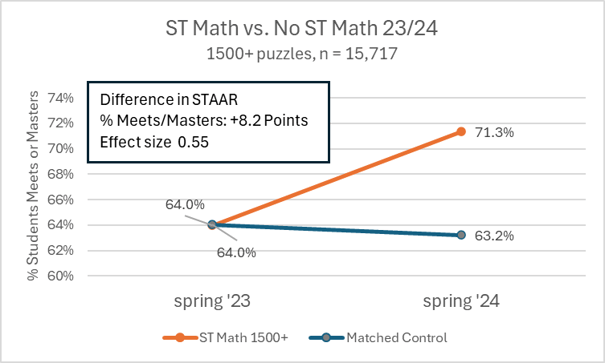
Independent evaluations have shown measurable gains when learning environments engage spatial-temporal reasoning in this way. But perhaps the more important outcome is harder to measure: Students begin to experience math as something that makes sense.
For generations, we have debated how to make math easier. Perhaps the better question is how to make math intuitive again.
So What Does ST Really Stand For?
Yes, it stands for Spatial-Temporal.
But perhaps more importantly, it stands for a simple idea: Math makes sense when learning begins the way thinking begins.
Spatial-temporal reasoning isn’t a special talent possessed by a few students. It is how human beings make sense of the world before anyone teaches them how.
ST Math simply begins there — where understanding already lives.