


Annual Report 2025 – Moving Minds Forward

Stats & Milestones | Partnerships | Districts | Communities | Future Focus
To Our Partners
As we look back on fiscal year 2025, the evidence is undeniable: no other math program comes close to the depth, consistency, and scale of impact delivered by ST Math. The results are not occasional or isolated — they are predictable, replicable, and available to every learner we serve.
Across five consecutive statewide Texas Data Studies, multiple independent evaluations, and millions of students nationwide, ST Math has demonstrated large, measurable gains — often double the growth of peers. Recent grade 6-8 analyses from Texas show even higher effect sizes (0.86 for SPED students), confirming that when barriers are removed, potential is revealed.
In districts such as San Mateo–Foster City, where more than half of students are socio-economically disadvantaged, interim assessments showed entire schools shifting from 70–80 percent not meeting standards to 70–80 percent meeting them in a single year. Implementation fidelity among our healthiest district partners continues to rise, reinforcing that impact scales with sustained engagement and data-driven practice.
From Humble Beginnings to Unmatched Impact
What began as a humble research effort has grown into a national movement shaped by the perseverance of teachers, the dedication of our staff, the belief of our donors, and the curiosity of millions of students. ST Math has now reached more than 10 million unique students and remains validated by multiple independent researchers, including teams at Brown University and the Annenberg Institute. Our research excellence continues to be recognized. MIND was selected as a top team in the Gates AIMS Collaboratory for Advancing Innovative Math Solutions, completed its five-year AERDF EF + Math project culminating in a 3,000-student randomized-controlled trial of MathFluency+, and expanded district-driven research collaborations in places such as Fairfax County, VA. At the state level, programs in Texas, North Carolina, and Florida advanced rapidly, while Utah continued its long-running partnership.
Building the Future
Beyond instruction, our outreach continues to strengthen communities. Family Math Nights, Math Week celebrations, and the inaugural National JiJi Day Puzzle Challenge brought record engagement — 6.3 million puzzles solved in a single day. At the same time, we are laying the foundation for the next generation of innovation. InsightMath continued to gain momentum, representing a pivotal step toward a comprehensive curriculum grounded in the same neuroscience that made ST Math so effective. And looking ahead, we are harnessing AI onto DDE (Dynamic Digital Education) — integrating adaptive intelligence directly into design, delivery, and evaluation — to personalize learning and extend our impact even further.
A Shared Mission
To our donor community: your investment does more than support a program. It sustains the most effective, scalable, and equitable math-learning ecosystem available today. You expand access where it’s needed most, strengthen a research foundation unmatched in the field, and help ensure that every student can engage in rigorous, neuroscience-based mathematics learning that changes futures.
The need is urgent, the evidence is strong, and the opportunity to move minds forward has never been greater. I am confident in what lies ahead — not because the work is easy, but because it is right, and because of what we can accomplish together.

With gratitude,
Mark Bodner, Ph.D.
CoFounder, Research Scientist & Board Member
MIND Education & MIND Research Institute
“Your investment does more than support a program. It sustains the most effective, scalable, and equitable math-learning ecosystem available today.“
— Mark Bodner, Ph.D.
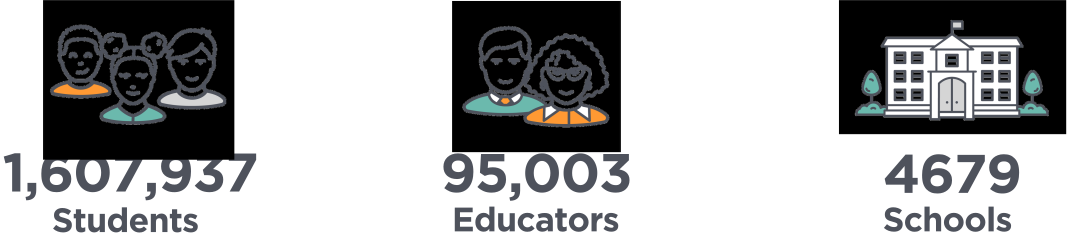
Stat
With the generous support of our partners, ST Math continued to reach students, educators and students across the country.
Real-World Impact: Evidence, Data, and Outcomes
ST Math demonstrates strong, sustained impact supported by rigorous research at scale. It holds a Tier 1 (“Strong”) rating on Evidence for ESSA, the highest standard for effectiveness, supported by four independent third-party studies representing more than 346,000 students.
Student outcome data consistently shows meaningful gains across demographics. On state assessments, ST Math students achieved pre-COVID proficiency and outperformed comparable schools by 7.5 percentage points and 18 scale-score points—reflecting MIND Education’s commitment to impact across diverse learning contexts.
Longitudinal evidence further reinforces these findings. Nearly 20 years of data show that ST Math schools begin at achievement levels similar to peers but consistently outperform them over time. The most recent QED study confirmed this pattern across multiple states and school settings. State-level analyses illustrate how these outcomes translate into real classrooms. In Texas, the 2025 STAAR study found that 18.7% of ST Math students advanced at least one performance level, while by grade five only 3.7% remained in the lowest band compared to 8% of non-users. A 13.6-point statewide advantage in students reaching “Meets” or “Masters” levels highlights ST Math’s ability to drive lasting improvement at scale.
“Year at a Glance” Milestones
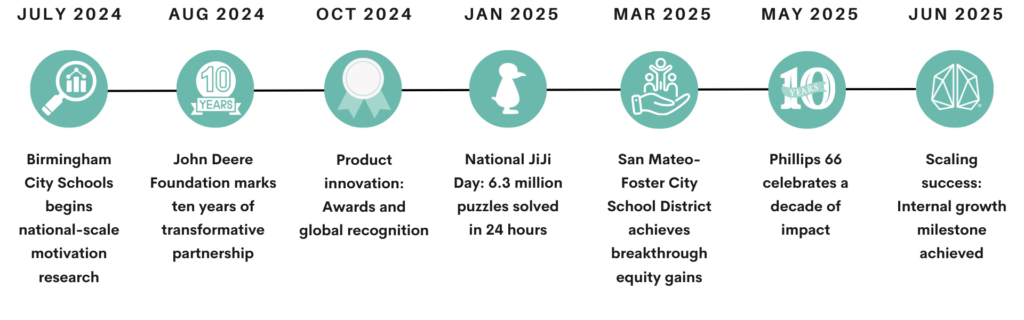
Click the month to see each milestone
July 2024
Birmingham City Schools begins national-scale motivation research
Supported by the Bill & Melinda Gates Foundation, Birmingham launches a three-year partnership with WestEd and MIND Education to explore how student motivation, persistence, and engagement impact math learning via ST Math gameplay data.
August 2024
John Deere Foundation marks ten years of transformative partnership
With a decade of support behind them, John Deere’s collaboration with MIND empowers nearly 80 schools and over 30,000 ST Math students and their teachers, enabling new levels of instructional change, family engagement, and measurable student growth.
October 2024
Product innovation: Awards and global recognition
At ISTE 2025, both ST Math and InsightMath were named “Best of Show” by Tech & Learning. These honors underscore the pedagogical and design excellence behind our programs.
January 2025
National JiJi Day: 6.3 million puzzles solved in 24 hours
Students and educators across 3,747 schools and 437,000 learners participated in the first-ever “One Day. One Goal.” Puzzle Challenge — a live national event that celebrated problem-solving and perseverance.
March 2025
San Mateo-Foster City School District achieves breakthrough equity gains
In a district where over half the students are socioeconomically disadvantaged and nearly a third are English learners, ST Math helped shift outcomes: schools moved from 70-80% not meeting standards to 70-80% meeting them, and underserved students gained eight percentage points on state assessments.
May 2025
Phillips 66 celebrates a decade of impact
After ten years of sustained investment, ST Math has reached 126 schools across 23 districts and more than 60,000 students. Recent data show students in these schools achieved double the annual growth in math performance versus peers, gaining a 12.4-point percentile advantage.
June 2025
Scaling success: Internal growth milestone achieved
As MIND continues to expand, its reach now spans 46 states and hundreds of partner districts and is supported by deepening research collaborations, product recognition, and donor-fueled growth. This year marked an important internal milestone as MIND strengthened its research partnerships and earned growing external validation. Collaborations with organizations such as AIR and the EF+Math Program advanced new studies of MIND-developed math learning tools, while an independent ISTE review reaffirmed the quality and learning-science foundation of ST Math. Together, these achievements reinforce MIND Education’s position as a trusted, research-driven leader delivering joyful, effective math learning at scale.
Innovations & Program Highlights
MIND continues to expand and strengthen its impact through innovative programs, research partnerships, and product advancements grounded in how the brain learns.
In June, MIND announced the launch of InsightMath, the only K–6 core math curriculum designed around neuroscience. Built on the visual-learning foundation of ST Math and co-developed with educators, and students, InsightMath integrates game-based puzzles, spatial–temporal reasoning, classroom discourse, and a visual-to-symbolic progression to build deep understanding and confident problem solvers.
MIND also partnered with AIR and AERDF’s EF+Math Program to develop MathFluency+, a research initiative exploring how joyful, game-based learning strengthens foundational math skills and executive function. Early pilots in grades 3–5 showed gains in fluency, working memory, inhibitory control, and processing speed, alongside increased student confidence and persistence.
ST Math continued to evolve during the 2024–25 school year with new visual games, an island-themed progression, expanded instructional supports, and enhanced educator dashboards. These improvements helped students achieve more learning in less time while making integration into daily instruction easier for teachers.
Independent research remains central to MIND’s work. An ISTE’s 2024 review identified ST Math as a model for high-quality, research-aligned digital learning, highlighting its strong grounding in learning science, support for productive struggle, and alignment with inquiry-driven, student-centered instruction.
MIND also strengthened its infrastructure and future readiness through SOC 2 Type 2 compliance, data-driven AI design, and continued thought leadership defining what “math the way the brain learns” looks like in practice—advancing equitable, accessible, and joyful math learning for all students.
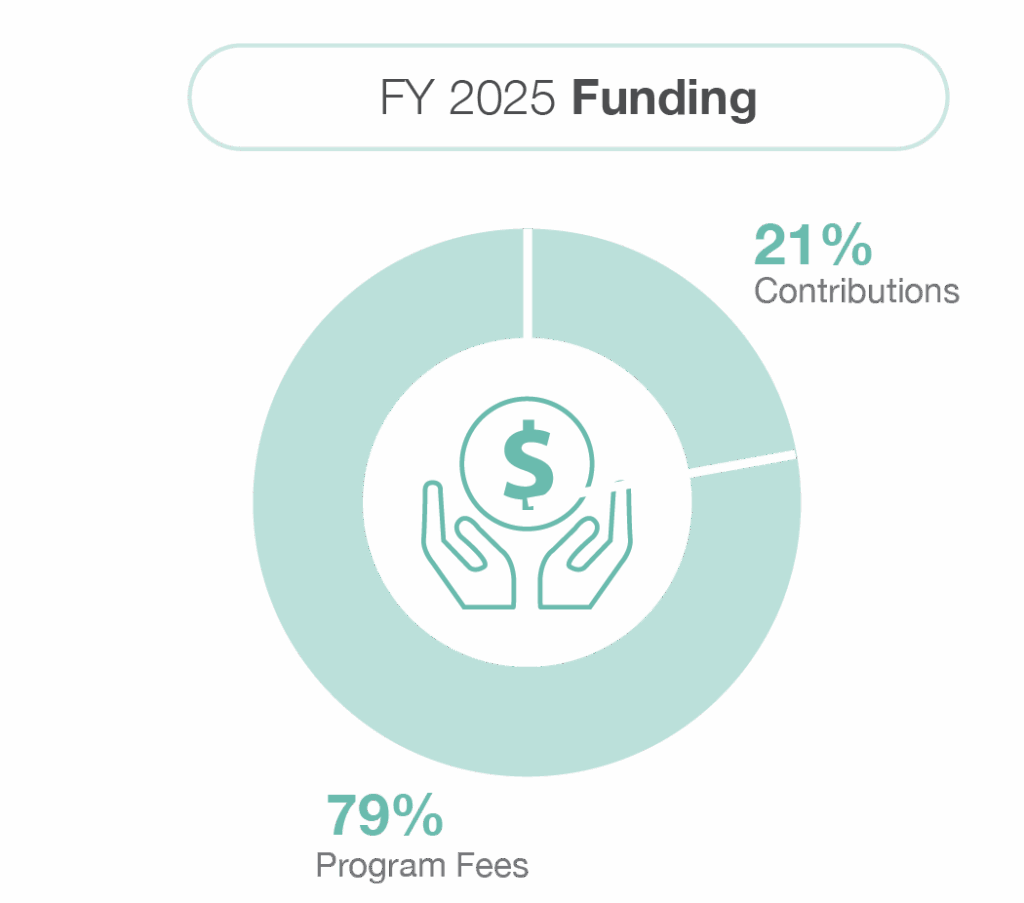
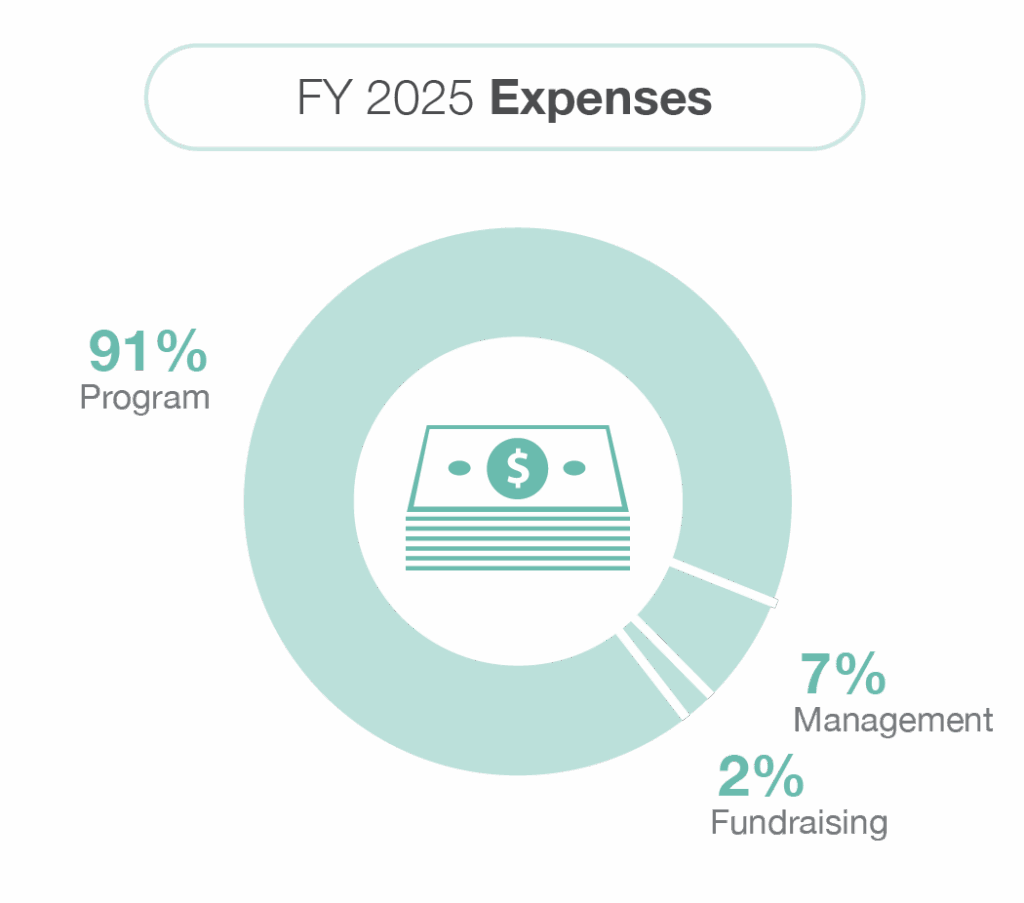
2024-2025 Financials
Stories of Impact: Moving Minds Forward Across Communities
Across the country, students are discovering that math can feel empowering, intuitive, and joyful. This year, those moments unfolded in thousands of classrooms, shaped by educators who believe in possibility, families who show up with curiosity, and partners whose commitment strengthens the work.
What follows is a look at five interconnected stories of impact — each distinct, yet all pointing to the same truth: when students learn math the way the brain learns, their confidence and outcomes grow.
Partnerships Rooted in Long-Term Commitment: A Decade of Progress
Phillips 66: 10 Years of Community Transformation
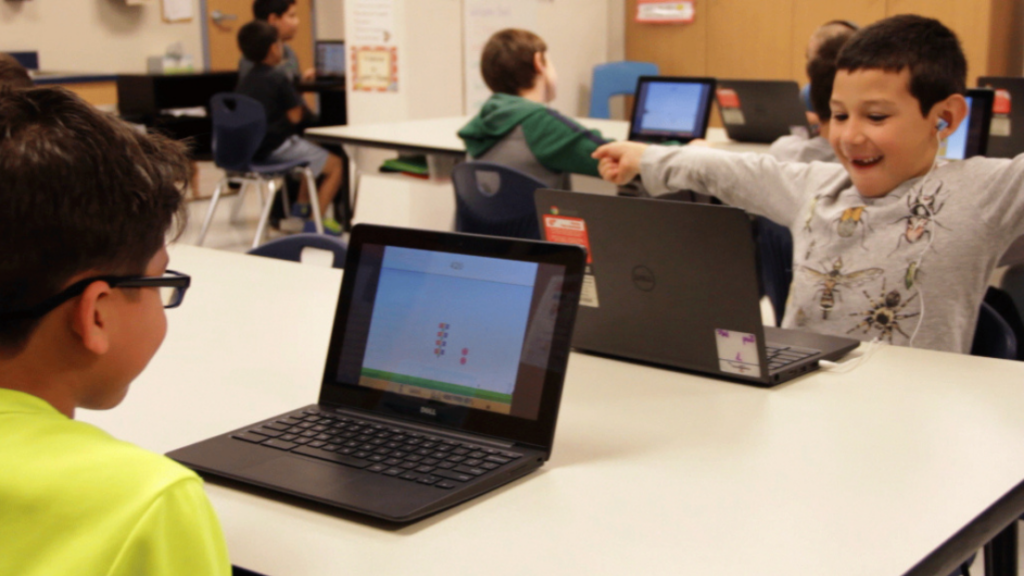
For more than a decade, Phillips 66 has partnered with MIND to bring ST Math to communities across the country. Their investment has funded ST Math access for 126 schools across 23 districts, reaching more than 60,000 students.
A recent analysis of this 10-year partnership revealed remarkable results: students in Phillips 66–supported schools achieved more than twice the annual growth in math performance compared to peers and gained a 12.4 percentile point advantage in state math rankings by spring 2024.
Educators often describe the transformation not just in scores, but in mindset:
“Students are building perseverance and deep conceptual understanding while having fun.”
— Kim Anthony, Executive Director of Elementary Education, Billings Public Schools
Phillips 66 has also fueled Family Math Nights, local celebrations, and districtwide engagement efforts, turning math into a community experience.
John Deere: Strengthening Communities Through Family Learning
John Deere’s decade-long partnership with MIND reflects a shared belief that joyful, meaningful math learning strengthens entire communities. Their support has helped bring Family Math Week to districts across the Quad Cities area, deepening family engagement and celebrating the perseverance and curiosity of young learners.
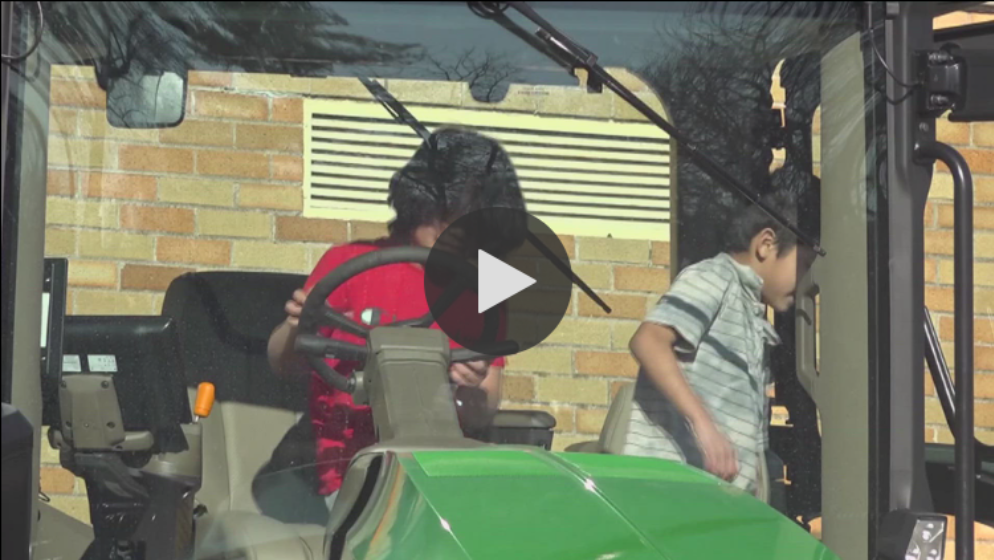
At Hillcrest Elementary in East Moline, Math Week culminated in a special “Touch the Tractor” celebration after the school achieved remarkable participation with more than 220,000 minutes logged. To celebrate their hard work, John Deere partnered with the school to bring tractors and create a hands-on STEM experience that connected problem-solving to real-world careers. Students climbed aboard equipment, met engineers, and explored activities that reinforced the thinking skills behind their success. Despite national declines in mathematics performance, Hillcrest Elementary’s mathematics performance continued to move in an upward direction—and educators credit much of that growth to students’ perseverance and the impact of ST Math.
John Deere’s investment also supports ST Math in home communities as well as key innovation work at MIND, helping accelerate new tools, research, and early foundational development that continue to shape future learning experiences. Their partnership demonstrates how aligned communities can make learning joyful, inclusive, and connected beyond the classroom.
“Students are building perseverance and deep conceptual understanding while having fun.”
— Kim Anthony, Executive Director of Elementary Education, Billings Public Schools
Districts Leading the Future of Learning, Research, and Belonging
Birmingham City Schools, AL – A Landmark Research Partnership
One of the most significant developments this year is Birmingham City Schools’ leadership in pioneering new research on student motivation and math achievement.
Supported by a Gates Foundation grant, Birmingham is leading a three-year research initiative with WestEd and MIND, exploring how motivation, persistence, and engagement influence math learning using real-time ST Math gameplay data.
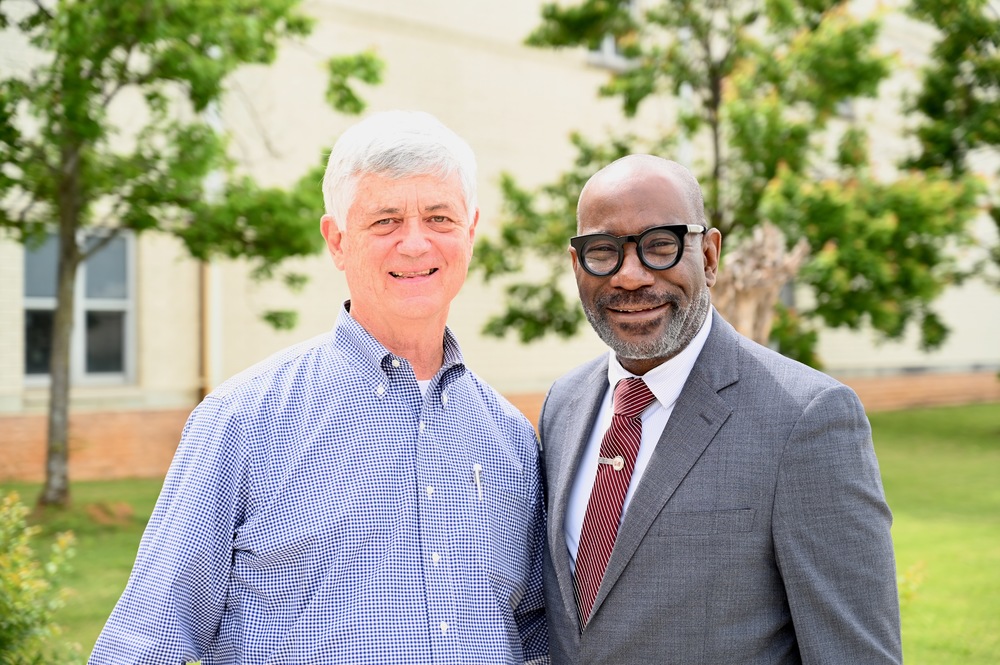
Superintendent Dr. Mark Sullivan captured why this work matters:
“A strong curriculum isn’t enough if students aren’t engaged and motivated.”
Through this collaboration, Birmingham is co-designing new “right-now” indicators that help teachers identify when students are persisting, when they’re beginning to disengage, and when intervention can make the biggest difference.
This isn’t a program-level improvement. It’s system-level innovation that has the potential to influence math research and practice nationwide. It’s a model of what’s possible when visionary districts, researchers, and philanthropic partners work together to move an entire ecosystem forward.
San Mateo–Foster City, CA & Adams 12 Five Star Schools, CO
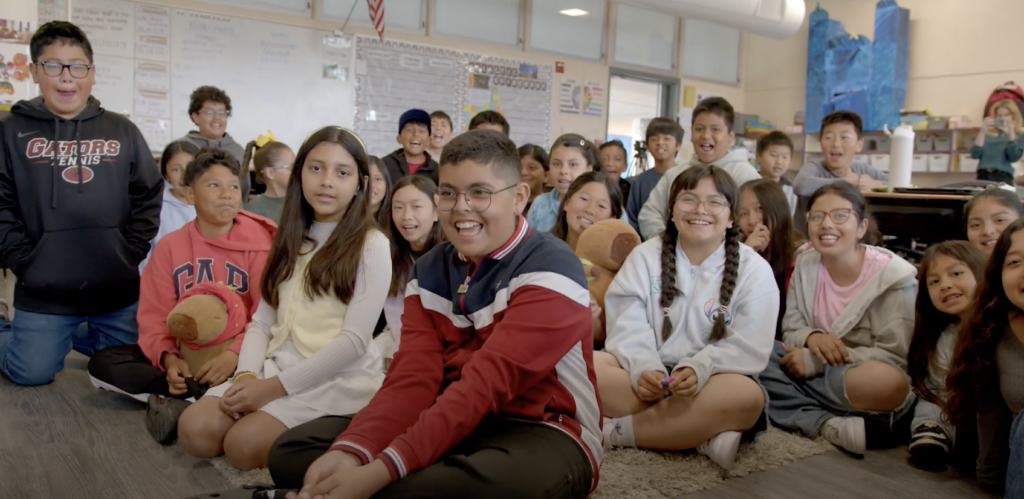
In San Mateo–Foster City, ST Math has become a catalyst for equity, perseverance, and belonging. In a district where more than half of students are socioeconomically disadvantaged and nearly a third are English learners, the shift has been remarkable. Interim assessments showed schools moving from 70–80% of students not meeting standards to 70–80% meeting them. Students from economically disadvantaged backgrounds gained eight percentage points on the state math assessment in a single year, with students experiencing homelessness showing meaningful gains as well.
Teachers describe classrooms where multilingual learners jump into puzzles on day one, classmates cheer each other on, and students routinely say, “I’ll get it the second or third time,” as they work through challenges. What emerges is more than improvement — it’s identity change. Students who once said “I’m not a math person” now see themselves as problem-solvers with the confidence to take on whatever comes next.
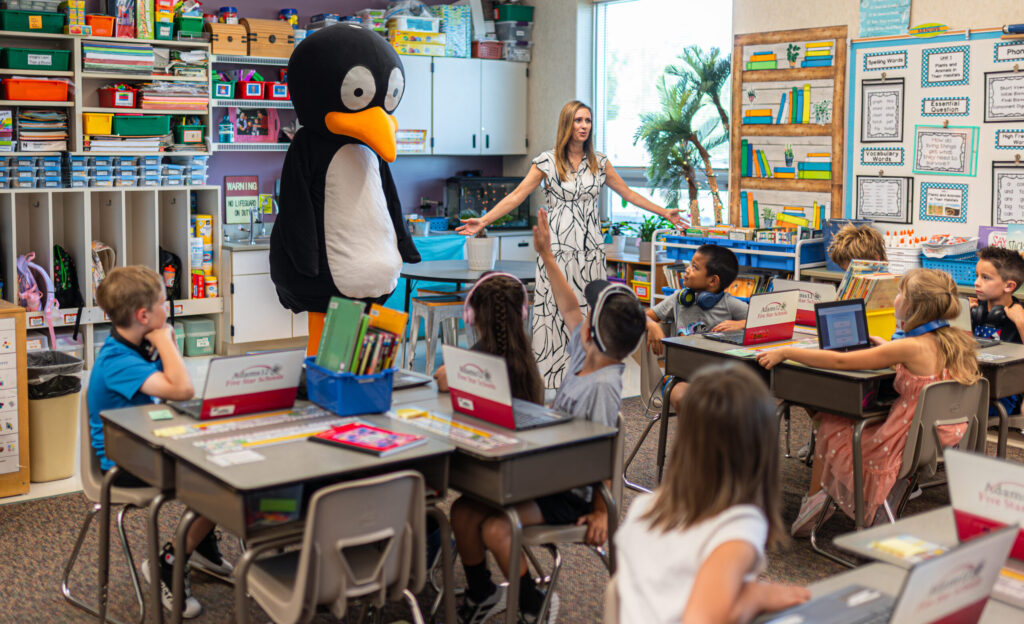
Across Adams 12 — a diverse district of more than 34,000 students located just north of Denver, CO — ST Math has reshaped what mathematical thinking looks and feels like for learners. With nearly half the district identifying as Hispanic/Latino and many students entering classrooms as emerging multilingual learners, teachers sought a way to elevate discourse, conceptual understanding, and student voice.
They found it through visual learning. Teachers report that math conversations have transformed — from quiet uncertainty to lively exchanges about patterns, strategies, and ideas. As one educator shared, “Students now have so many opportunities to talk about the math… it’s built a real love for math in my classroom.”
What leaders see echoes this shift: students taking risks, persisting through puzzles, supporting one another, and proudly sharing their strategies aloud. For many students, especially multilingual learners, visuals create a bridge to understanding — ensuring that expression and insight aren’t limited by language. In Adams 12, math has become a space where students feel seen, capable, and connected.
“Students now have so many opportunities to talk about the math… it’s built a real love for math in my classroom.”
— Educator
Communities Celebrating Learning Together

This year, math joy extended far beyond classrooms — it became a nationwide celebration.
During the first-ever National JiJi Day Puzzle Challenge, students, teachers, and families across the country united around a shared goal: solve as many ST Math puzzles as possible in one day.
The response was extraordinary.
In just 24 hours, students solved more than 6.3 million puzzles — representing 437,000 students across 3,747 schools.
Classrooms dressed up as JiJi, streamed celebrations, and watched their puzzle counts climb on a live national dashboard. What began as a challenge quickly became a movement — a collective reminder that perseverance, curiosity, and joyful struggle connect learners everywhere.
Family Math Nights and Math Weeks — supported in part by partners like Phillips 66, John Deere, Intel Corporation, and others — deepened that sense of connection. In gyms, cafeterias, libraries, and at home, families worked alongside their children to explore puzzles, strategies, and moments of insight.
As one principal shared:
“Families left saying, ‘I finally understand how my child thinks about math.’ That changes everything.” Across all of these moments, one theme was clear: when learning becomes joyful and shared, communities grow stronger — together.
“Families left saying, ‘I finally understand how my child thinks about math.’
That changes everything.”
— Principal regarding Family Math Nights
Together, These Stories Share One Message
From Birmingham’s groundbreaking research, to long-term partnerships in Texas, Iowa, Illinois, and across the country, to the spark of confidence in a single student on JiJi Day — this year’s impact is collective, meaningful, and deeply human.
Educators are making it real.
Students are showing what’s possible.
Communities are celebrating together.
And partners — including donors — are helping accelerate the work.
This is Moving Minds Forward. And it’s happening every day.
Path Forward: Scaling Impact Through Innovation and Equity
In the coming year, MIND Education will focus on strengthening its flagship programs and advancing the next generation of learning tools. This includes continued investment in ST Math with enhancements that deepen engagement, improve outcomes, and support educators at scale.
At the same time, MIND will advance InsightMath through close partnership with select educators and districts, gathering real classroom insights and early evidence to guide refinement. This deliberate, collaborative approach ensures the curriculum moves forward with a strong foundation of educator voice and demonstrated impact.
Together, these priorities reflect MIND’s commitment to scale what works, invest responsibly in what’s next, and ensure every student has access to math learning that builds understanding, confidence, and possibility.


Thank you to our Partners!





To learn more about MIND’s mission, programs, and impact,
please contact socialimpact@mindresearch.org.